
The Role of AI and Automation in Software Development
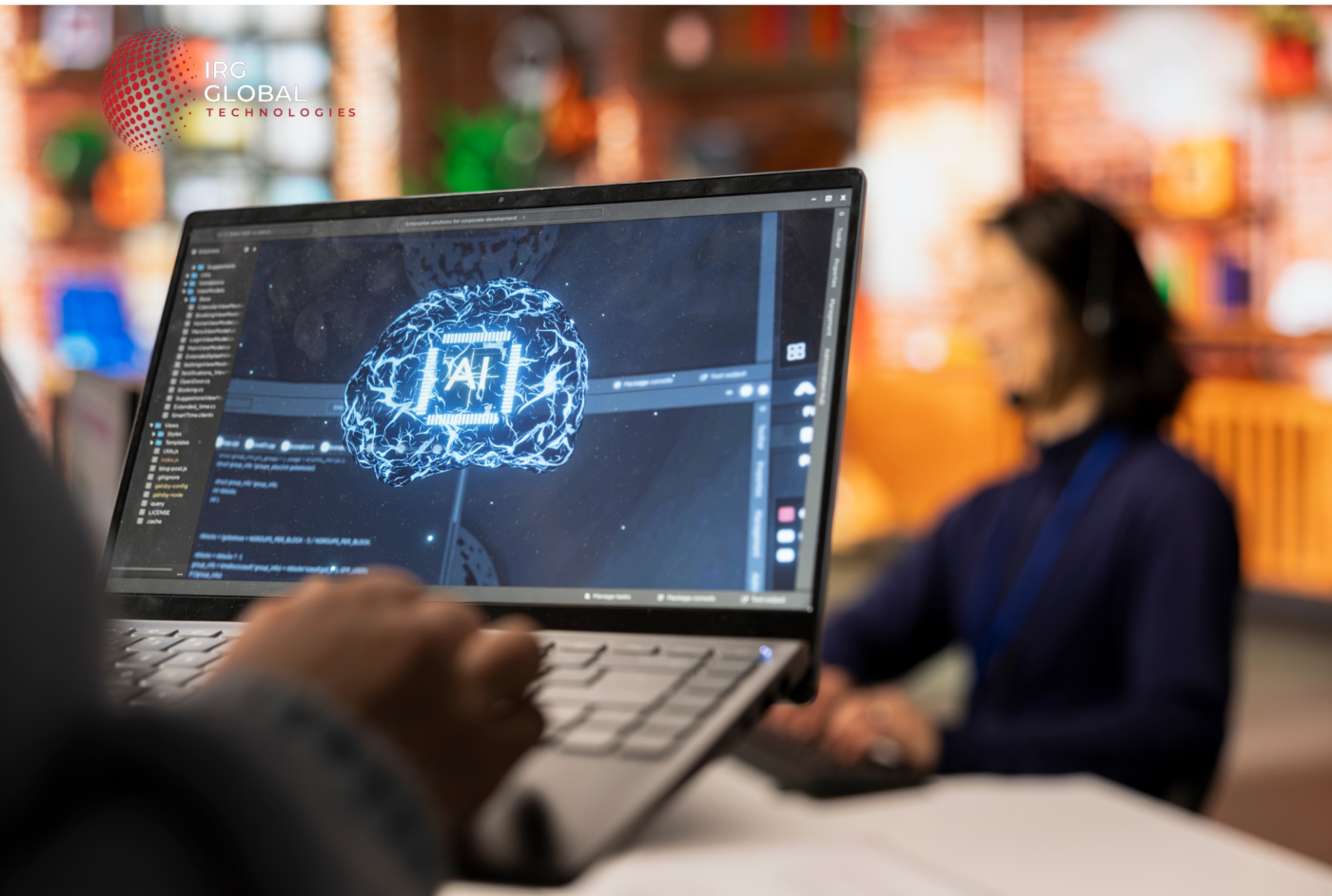
In 2026, the software development landscape has shifted from “coding with tools” to “orchestrating intelligence.” If you stepped away from a computer in 2023 and sat down today, you’d notice that the hum of the industry has changed. The blank cursor is no longer a source of dread; it’s a collaborator.
This is the era of the AI-First Software Development Lifecycle (SDLC). It isn’t about robots replacing humans, it’s about automation removing the “grunt work” so engineers can focus on architecture, empathy, and innovation.
1. The Death of the “Blank Page” Problem
In the past, starting a new project involved hours of setting up boilerplate code, configuring environments, and hunting for the right library. Today, Generative AI for Code Creation has made the “from scratch” workflow obsolete.
By 2026, over 41% of worldwide code is AI-generated. Tools have evolved from simple autocomplete (like the early Copilots) into Agentic Assistants. These agents don’t just suggest the next line; they understand the entire repository. You can describe a feature in natural language “Add a subscription billing module that integrates with Stripe and updates our PostgreSQL database” and the AI will generate the multi-file pull request, complete with logic, database migrations, and documentation.
2. Testing: From Bottleneck to Guardrail
Testing used to be the “necessary evil” that slowed down deployment. In 2026, it is almost entirely autonomous and self-healing.
- Predictive Defect Detection: Machine learning models now analyze your code as you write it, flagging potential bugs based on historical patterns before you even hit “Save.”
- Self-Healing Test Suites: If a UI element changes (like a button moving from the left to the right), the AI automatically updates the test scripts. No more broken builds because of a minor CSS change.
- AI-Generated Edge Cases: AI agents can simulate thousands of “chaotic” user interactions that a human tester might never think of, ensuring the software is resilient under stress.
3. The Rise of the “Software Orchestrator”
As automation takes over syntax and debugging, the role of the developer is undergoing a fundamental transformation. We are moving toward “Vibe Coding” a term popularized in 2025 where the developer’s primary skill is prompt craft and architectural judgment.
The Shift in Skills
| Skill (2020) | Skill (2026) |
| Writing Syntax & Boilerplate | AI Orchestration & Prompt Engineering |
| Manual Debugging | System Design & Result Validation |
| Technical Documentation | AI Ethics & Security Governance |
| Narrow Domain Focus | Cross-Stack Product Thinking |
Junior developers are no longer expected to be syntax wizards; they are expected to be validators. They must know enough about the “hard way” to spot when an AI-generated solution is subtly flawed or introduces a security vulnerability.
4. The “Agentic” CI/CD Pipeline
Continuous Integration and Deployment (CI/CD) has moved beyond simple scripts. Modern pipelines are populated by Multi-Agent Systems.
Imagine a “Security Agent” that scans for vulnerabilities, a “Performance Agent” that benchmarks every commit, and a “Documentation Agent” that updates the README in real-time. These agents collaborate autonomously. If the Performance Agent notices a memory leak, it doesn’t just alert the human; it communicates with the Coding Agent to suggest a fix.
5. Democratizing Development (The “No-Code” Evolution)
AI has lowered the barrier to entry so significantly that 80% of AI tool users now come from non-IT backgrounds. Business analysts and domain experts are building sophisticated internal tools using natural language. This doesn’t put engineers out of work; instead, it frees them from building internal dashboards and CRUD apps, allowing them to tackle high-stakes problems like quantum-safe encryption or real-time edge computing.
6. The Reality Check: Challenges in 2026
It’s not all sunshine and automated deployments. The integration of AI has brought new, complex challenges:
- The Trust Gap: How do you ensure an AI didn’t introduce a “hallucinated” security flaw? In 2026, the EU AI Act and other regulations require strict documentation and audit trails for AI-generated code.
- Data Privacy: Feeding proprietary code into LLMs remains a massive legal hurdle. Companies are increasingly moving toward Hybrid Computing, using private, on-premises AI models to keep their “secret sauce” safe.
- The Deskilling Risk: There is a growing concern that the next generation of developers might lose the ability to debug from first principles. If the AI goes down, can the team still fix the system?
Conclusion: The New Golden Age
The role of AI and automation in software development isn’t to replace the human mind, but to amplify it. By 2026, we’ve realized that software isn’t just about code, it’s about solving human problems.
Automation handles the syntax; humans handle the strategy. We’ve traded “typing” for “thinking.” As we look toward the 2030s, the most successful developers won’t be those who can write the fastest code, but those who can most effectively lead an army of digital agents to build something meaningful.
