
Engineering Excellence: A Deep Dive into Our Strategic App Development Lifecycle
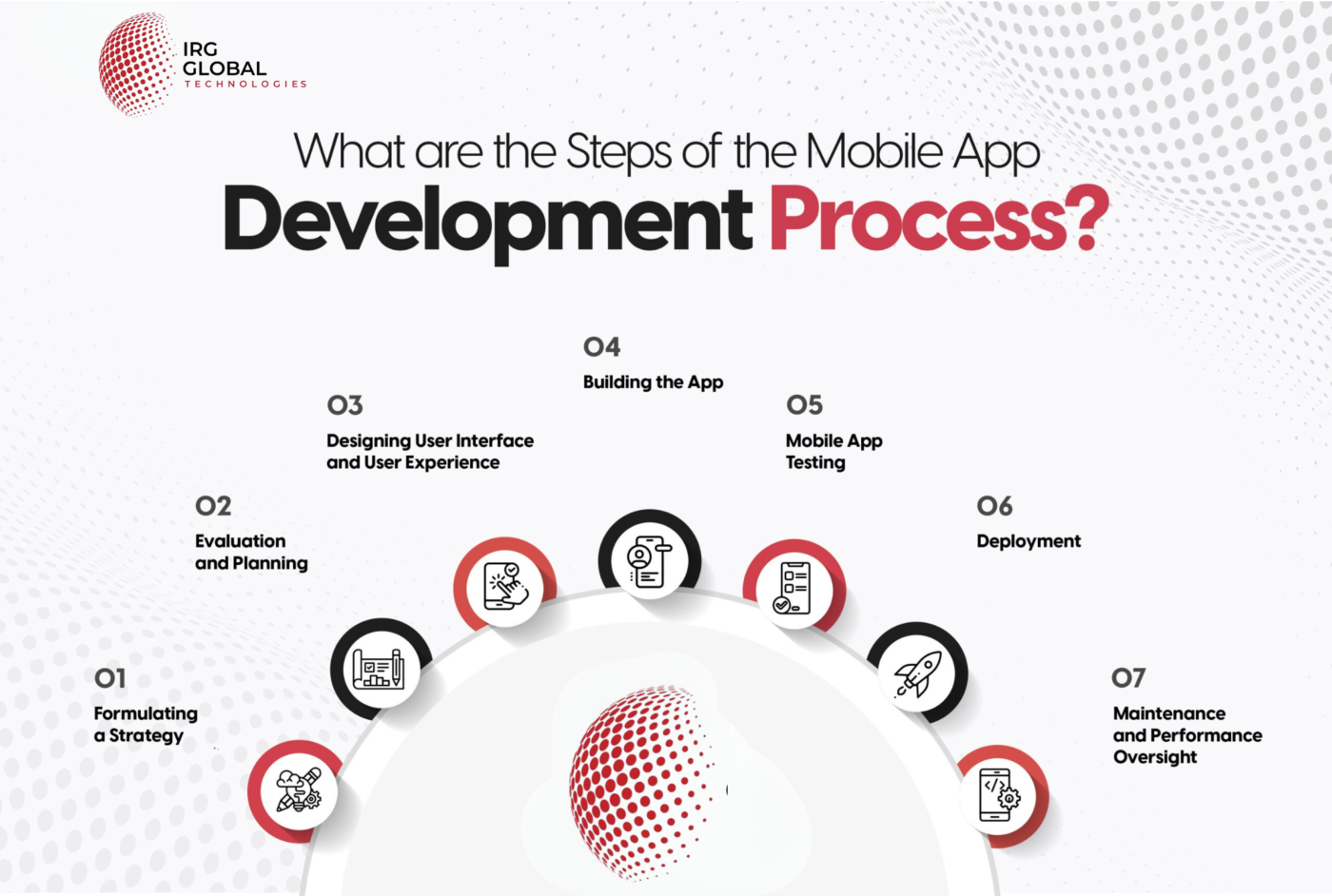
Phase 1: Discovery & Strategic Alignment
Every great app starts with a problem, not a feature. We begin by stripping away the “bells and whistles” to find the core value proposition.
- Market Research: We analyze competitors and identify market gaps. In 2026, this often involves looking at how AI and 5G can give you a competitive edge.
- User Personas: Who is this for? We build detailed profiles of your target users to ensure every button we place serves their specific needs.
- The MVP Roadmap: We define the Minimum Viable Product (MVP). Instead of building everything at once, we focus on the features that will prove your concept and delight early adopters.
Phase 2: UX/UI Design – The Blueprint of Success
Design is where your app finds its soul. We don’t just make it “look pretty”; we make it functional.
- Wireframing: Think of this as the architectural skeleton. We map out the user journey to ensure navigation is seamless and logical.
- High-Fidelity Mockups: Using tools like Figma, we apply your branding such as colors, typography, and motion design to create a visual representation of the final product.
- Interactive Prototyping: We build a clickable version of the app. This allows you to “feel” the user flow before a single line of code is written, saving time and resources during development.
Phase 3: Architecture & Tech Stack Selection
Choosing the right foundation is critical for scalability. We don’t believe in a one-size-fits-all approach.
| Approach | Best For | Key Technologies |
| Native | High-performance, complex apps | Swift (iOS), Kotlin (Android) |
| Cross-Platform | Faster time-to-market, shared codebase | Flutter, React Native |
| PWA | Web-based experiences with app-like feel | Workbox, Service Workers |
We also plan your Backend Architecture the engine under the hood. In 2026, this means utilizing serverless computing and edge AI to ensure your app is lightning-fast, regardless of user load.
Phase 4: Agile Development (The “Sprints”)
This is where the magic happens. We work in two-week “sprints,” a core tenet of the Agile Methodology.
- Frontend Development: Building the interface users interact with.
- Backend Integration: Connecting the app to databases, APIs, and third-party services (like payment gateways or AI agents).
- Continuous Integration: We use CI/CD pipelines to merge code frequently, ensuring that new features don’t break existing ones.
Phase 5: Quality Assurance & Security
In an era where data privacy is paramount, “good enough” is never enough. Our QA team puts the app through a “stress test” marathon.
- Functional Testing: Does every button do what it’s supposed to?
- Security Auditing: We implement Zero-Trust architecture and biometric authentication to protect user data.
- Performance Testing: We simulate thousands of concurrent users to ensure the app doesn’t crash during a 5G-speed surge.
Phase 6: Deployment & Launch
Launching an app is more than just hitting “upload.” We handle the technical hurdles of the Apple App Store and Google Play Store.
- App Store Optimization (ASO): We optimize your descriptions and keywords so users can actually find you.
- Compliance Checks: Ensuring the app meets the latest privacy regulations (GDPR, CCPA) and platform guidelines.
- The “Soft Launch”: Often, we release to a small beta group first to gather real-world feedback before the global debut.
Phase 7: Post-Launch Growth & Maintenance
The launch is the beginning, not the end. The digital landscape changes daily, and your app needs to evolve with it.
“A successful app is never finished; it is continuously refined based on how people actually use it.”
We monitor post-launch analytics to see where users thrive and where they drop off. This data-driven approach informs our regular updates, security patches, and the rollout of new features for Version 2.0.
